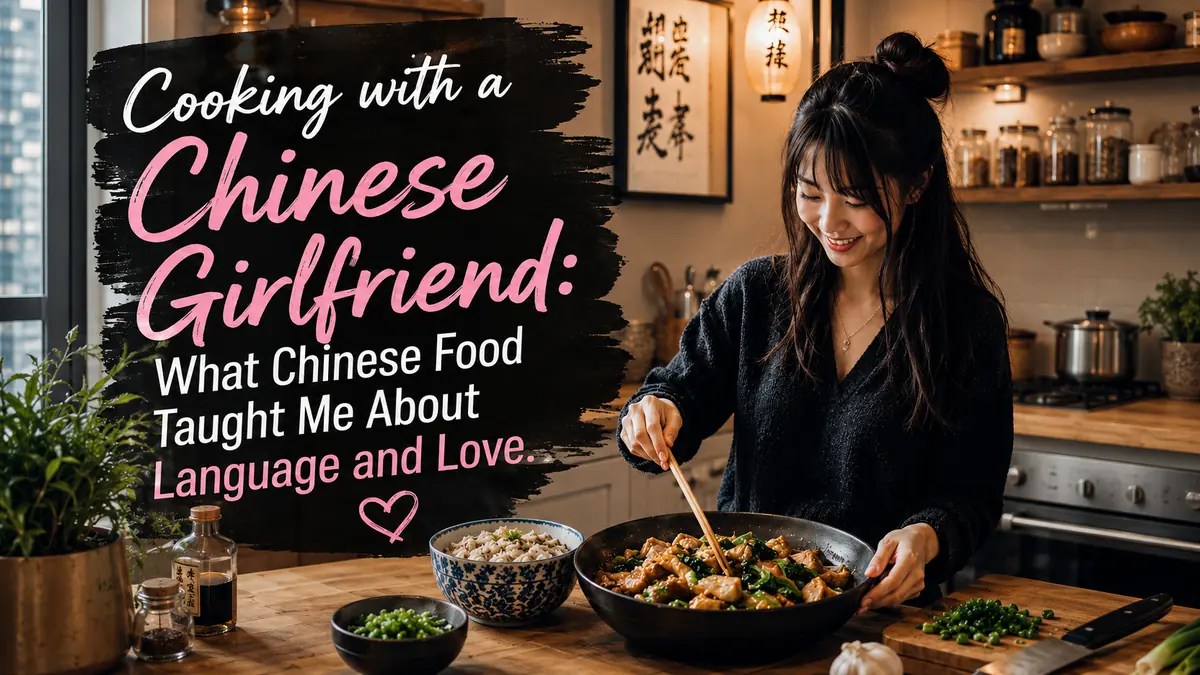
I still remember the first time Sunny (my Chinese partner) cooked a proper Chinese meal for me.
It was not something thrown together because we were hungry. She had planned the dishes, bought specific ingredients and worked around the kitchen with the confidence of someone repeating movements learned over a lifetime.
At first, I thought I was simply watching her cook. Over time, I realised I was also watching her express care.
Food can carry enormous emotional weight in Chinese families. It can say, “I was thinking about you,” “I want you to be healthy,” or “You belong here” without anyone needing to say those words directly.
Of course, China is far too large and diverse for one set of rules to describe every person or family. This article is based on my own experience with Sunny, who grew up in Shenyang in Northeast China, together with some widely shared Chinese food traditions. Your partner and her family may do things differently.
That is part of what makes cooking with a Chinese girlfriend so interesting. You are not just discovering new food. You are learning about her region, her childhood, her family and the way she understands care.
Food as a Way of Showing Love
One of the first everyday Mandarin questions many learners encounter is:
你吃了吗? (Nǐ chī le ma?) — Have you eaten?
It has traditionally been used as a familiar greeting, especially among older people, relatives and neighbours. It is less common as a general greeting among many younger speakers today, so it should not be treated as the Chinese equivalent of “How are you?” in every situation.
Within a family, however, asking whether someone has eaten is often exactly what it sounds like: a practical expression of concern.
When Sunny saves a good piece of meat for my bowl, checks whether I have eaten or makes something warm because I look tired, I have learned not to dismiss it as a routine domestic task. For her, food is one of the ways care becomes visible.
This does not mean every Chinese person expresses affection through cooking, or that cooking should automatically be a woman’s responsibility. It means that in many Chinese households, feeding the people you love has a significance that can be easy for an outsider to miss.
Cooking Together Without Getting in the Way
The kitchen can be one of the best places to become closer, but only if you approach it with curiosity.
If your partner is cooking a dish she knows well, let her lead. Ask what would genuinely help instead of taking over or explaining how you would do it. You might wash vegetables, chop spring onions, prepare bowls or clean as she cooks.
A useful question is:
我能帮你做什么? (Wǒ néng bāng nǐ zuò shénme?) — What can I help you with?
Pay attention to the small systems in the kitchen too. A carbon-steel wok may need different care from a stainless-steel pan. Certain knives, chopping boards or sauces may have a particular purpose. If you are unsure, ask before changing something.
Most importantly, do not react badly to an unfamiliar smell before you have even tasted the food. Garlic, ginger, black vinegar, fermented black beans, doubanjiang, sesame oil and Shaoxing wine can all produce strong aromas. Not every ingredient belongs to every region, but each can be an important part of a particular dish.
Curiosity is far more attractive than suspicion.
The Wok: Useful, Versatile and Often Misunderstood
The wok is one of the most versatile tools in a Chinese kitchen. It can be used for stir-frying, steaming with a rack, deep-frying, simmering, boiling and braising.
A carbon-steel wok develops a dark seasoned surface over time. That layer helps protect the metal from rust and can reduce sticking. It should not be confused with wok hei, the Cantonese term often translated as “the breath of the wok.”
The smoky flavour associated with restaurant stir-fries comes mainly from intense heat, fast cooking and tiny droplets of oil vaporising or briefly igniting as food is tossed. A seasoned surface helps, but an old-looking wok does not create that flavour by itself. Most domestic stoves also produce far less heat than a restaurant wok burner, so home-cooked food may taste excellent without having dramatic restaurant-style wok hei.
Wok care also needs a little nuance. A small amount of mild dish soap will not normally destroy a properly seasoned carbon-steel wok. What causes more trouble is soaking it, putting it in a dishwasher or aggressively scouring away the seasoning. After washing, dry it thoroughly—often over low heat—and apply a very thin layer of oil if needed. If it is not your wok, ask the owner how they prefer to care for it.
Chinese Food Is Not One Cuisine
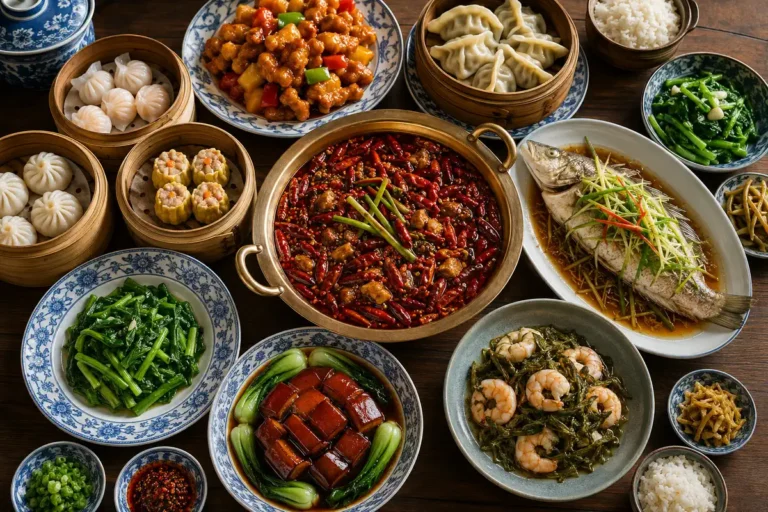
Calling something “Chinese food” is a little like calling every European dish “European food.” Geography, climate, local ingredients, migration and history have created many distinctive regional traditions.
What your girlfriend cooks may tell you a great deal about where she grew up.
Dongbei Food: Hearty, Bold and Generous
Sunny is from Shenyang, so Dongbei food is the style I know most personally. Dongbei (东北, Dōngběi) means Northeast and usually refers to Liaoning, Jilin and Heilongjiang.
The region’s long, cold winters helped shape a cuisine built around warming stews, preserved vegetables, wheat foods, pork and generous portions.
Some dishes worth knowing include:
- 锅包肉 (Guō bāo ròu) — Thin slices of pork coated, fried until crisp and tossed in a glossy sweet-and-sour sauce. The meat is often fried more than once for crispness; it should not be confused with Sichuan twice-cooked pork.
- 东北乱炖 (Dōngběi luàn dùn) — A rustic Northeast stew whose ingredients vary, often combining pork with potatoes, green beans, aubergine, corn or other vegetables.
- 酸菜炖白肉 (Suān cài dùn bái ròu) — Fermented Chinese cabbage stewed with slices of pork, a classic cold-weather dish.
- 饺子 (Jiǎozi) — Dumplings filled with combinations such as pork and Chinese cabbage, pork and chives, or other family favourites.
- 地三鲜 (Dì sān xiān) — Potato, aubergine and green pepper cooked together in a savoury sauce.
The Northeast is also ethnically diverse. Korean-Chinese food traditions are especially visible in Jilin and Yanbian, and Korean restaurants and communities can also be found in cities such as Shenyang.
Dongbei hospitality often means more food than you expect. You do not need to force yourself to eat past the point of comfort, but clear appreciation will always be welcome.
Sichuan Food: Fragrant, Fiery and Complex
Sichuan cooking is famous for heat, but calling it simply “spicy” misses much of its complexity.
One of its best-known flavour combinations is 麻辣 (málà): numbing 麻 (má) from Sichuan peppercorn and chilli heat 辣 (là). Aromatic ingredients, fermented chilli-bean paste, preserved vegetables, garlic, ginger and different cooking techniques create many other flavour profiles too.
Classic dishes include:
- 麻婆豆腐 (Má pó dòu fu) — Tofu with minced meat, chilli-bean paste and often fermented black beans, producing a savoury, spicy and numbing sauce.
- 宫保鸡丁 (Gōng bǎo jī dīng) — Diced chicken with dried chilli and peanuts in a balanced sweet, sour and savoury sauce.
- 回锅肉 (Huí guō ròu) — Pork that is first simmered, then sliced and stir-fried with seasonings such as doubanjiang and vegetables.
- 火锅 (Huǒ guō) — Hot pot, a shared meal in which diners cook meat, tofu, vegetables and other ingredients in simmering broth at the table.
If your partner grew up eating chilli, there is no shame in admitting that a dish is too hot for you. Trying a small amount honestly is better than pretending you are comfortable while quietly suffering.
Cantonese Food: Freshness, Balance and Technique
Cantonese cuisine comes from Guangdong and has also strongly influenced the food of Hong Kong and many overseas Chinese communities.
Steaming, roasting and quick stir-frying are important techniques. Many dishes are designed to preserve the natural flavour and texture of good ingredients rather than cover them with a heavy sauce.
Well-known examples include:
- 清蒸鱼 (Qīng zhēng yú) — Whole fish steamed with ginger and spring onion, then finished with hot oil and seasoned soy sauce.
- 白切鸡 (Bái qiē jī) — Gently poached chicken served with a ginger and spring-onion condiment.
- 点心 (Diǎn xīn) — Dim sum, a broad family of small dishes such as shrimp dumplings, siu mai, rice-noodle rolls and turnip cake, commonly eaten with tea.
The apparent simplicity of these dishes can be deceptive. Precise timing and careful ingredient selection matter enormously.
Northern Food: Wheat, Noodles and Savoury Flavours
Across much of northern China, wheat has traditionally been more important than rice. Noodles, dumplings, steamed buns and flatbreads appear frequently, although there is enormous variation across the region.
Popular dishes include:
- 北京烤鸭 (Běijīng kǎo yā) — Beijing roast duck, usually served with thin pancakes, cucumber, spring onion and sweet bean sauce. Hoisin is sometimes used outside China, but it is not the traditional Beijing accompaniment.
- 炸酱面 (Zhá jiàng miàn) — Wheat noodles topped with a savoury fermented-bean and meat sauce, accompanied by crisp vegetables.
- 羊肉串 (Yáng ròu chuàn) — Cumin-scented lamb skewers associated especially with Xinjiang and China’s northwest, but now popular in many northern cities.
Shanghai and Jiangnan Food: Braising, Sweetness and Delicacy
Shanghai and the surrounding Jiangnan region are known for dishes that may use sugar alongside soy sauce, wine and vinegar to create a rounded savoury sweetness.
Famous examples include:
- 红烧肉 (Hóng shāo ròu) — Pork belly slowly red-braised with soy sauce, sugar, Shaoxing wine and aromatics.
- 小笼包 (Xiǎo lóng bāo) — Delicate steamed dumplings containing meat and hot broth.
- 糖醋排骨 (Táng cù pái gǔ) — Small pork ribs with a glossy sweet-and-sour coating.
These short lists only scratch the surface, but they demonstrate why no single description can capture all Chinese cooking.
Chinese Table Manners Without the Myths
Chinese dining etiquette changes according to the region, family and setting. A relaxed meal at home is different from a formal banquet, so watch the people around you instead of trying to memorise a rigid rulebook.
A few guidelines are still useful:
Do not leave chopsticks standing upright in rice. They resemble incense used in rituals for the dead and create an uncomfortable association.
Do not pass food directly from chopsticks to chopsticks. This can resemble part of a funeral rite. Place the food in a bowl or on a plate instead.
Use serving utensils when they are provided. If communal chopsticks or spoons are on the table, use them for shared dishes.
Let elders or honoured guests begin first in formal settings. At a casual family meal, simply follow the host’s lead.
Receive food graciously. A host or partner may place a favourite piece of meat or fish in your bowl as a gesture of care. Say thank you even if you would not normally choose that piece yourself.
Do not rely on the “leave food on your plate” rule. Advice about leaving a small amount to prove the host provided enough is highly dependent on context. In many modern homes, avoiding waste matters more. Eat what you comfortably can and say clearly when you are full.
The two-finger tea tap is not universal. Tapping two fingers on the table can silently thank someone for pouring tea, especially in Cantonese and southern Chinese settings. The popular story connecting it to an emperor travelling in disguise is best treated as a legend rather than established history.
Noise is contextual too. Slurping noodles is accepted in some settings, but loud chewing is not automatically a compliment. You can show appreciation more clearly with your words.
If you have an allergy, intolerance or strong dietary boundary, explain it politely before the meal. Respecting the cook does not require risking your health.
Making Dumplings Together
For many northern Chinese families, making 饺子 (jiǎozi) is a communal activity associated with family gatherings and Spring Festival.
Everyone can take part. One person rolls wrappers, another adds filling and someone else folds. The dumplings rarely look identical, and that is part of the pleasure.
When Sunny first showed me how to fold them, my attempts looked terrible. The pleats were uneven and a few threatened to open while cooking. She laughed, I kept trying and the misshapen ones tasted just as good as the perfect ones.
That is what makes dumpling-making special. It gives you time to talk while your hands are busy, and it turns dinner into something you created together.
A Simple Pork and Cabbage Filling
- Minced pork
- Napa cabbage, finely chopped
- Fresh ginger, grated
- Spring onion, finely sliced
- Light soy sauce
- Sesame oil
- Shaoxing wine or Chinese cooking wine
- White pepper, optional
Salt the chopped cabbage lightly, leave it briefly to release water, then squeeze it well before adding it to the pork. Mix the filling in one direction until it becomes cohesive. Families differ on the ratio of meat to vegetables, so adjust it to your taste.
Important food-safety note: Never taste raw filling that contains pork or poultry. Cook a teaspoon-sized portion in a frying pan or microwave, taste that, then adjust the seasoning. Cook ground-pork filling thoroughly; a food thermometer should reach at least 71°C (160°F) in the centre.
For a simple dipping sauce, combine Chinese black vinegar with a little light soy sauce and finely sliced ginger. Add chilli oil if you like.
Useful Mandarin for Cooking Together
Even a little Mandarin can change the atmosphere in the kitchen. It shows that you are not only eating the finished meal; you are taking an interest in the work, memories and language behind it.
Essential Phrases
好吃! (Hǎo chī!) — Delicious!
太好吃了! (Tài hǎo chī le!) — This is so delicious!
你做的菜真好吃。 (Nǐ zuò de cài zhēn hǎo chī.) — The food you cook is really delicious.
我能帮你做什么? (Wǒ néng bāng nǐ zuò shénme?) — What can I help you with?
我来洗碗吧。 (Wǒ lái xǐ wǎn ba.) — Let me wash the dishes.
这是什么菜? (Zhè shì shénme cài?) — What dish is this?
这个怎么做? (Zhège zěnme zuò?) — How do you make this?
有点辣,不过很好吃。 (Yǒu diǎn là, bú guò hěn hǎo chī.) — It is a little spicy, but very tasty.
真香! (Zhēn xiāng!) — It smells wonderful!
我吃饱了,谢谢。 (Wǒ chī bǎo le, xièxie.) — I am full, thank you.
我再吃一点。 (Wǒ zài chī yì diǎn.) — I will have a little more.
你教我吧。 (Nǐ jiāo wǒ ba.) — Teach me.
A Simple Kitchen Conversation
You: 我能帮你做什么? (Wǒ néng bāng nǐ zuò shénme?) — What can I help you with?
Her: 你帮我切一下葱吧。 (Nǐ bāng wǒ qiē yí xià cōng ba.) — You can help me chop the spring onions.
You: 好的。这是什么菜? (Hǎo de. Zhè shì shénme cài?) — Okay. What dish is this?
Her: 红烧肉。 (Hóng shāo ròu.) — Red-braised pork.
You: 这个怎么做? (Zhège zěnme zuò?) — How do you make this?
Her: 先把肉炒一下,然后加酱油、糖和料酒。 (Xiān bǎ ròu chǎo yí xià, rán hòu jiā jiàng yóu, táng hé liào jiǔ.) — First stir-fry the meat briefly, then add soy sauce, sugar and cooking wine.
You: 真香! (Zhēn xiāng!) — It smells wonderful!
Later, at the table:
You: 太好吃了!你做的菜真好吃。 (Tài hǎo chī le! Nǐ zuò de cài zhēn hǎo chī.) — This is so delicious! The food you cook is really delicious.
This exchange is simple, but genuine effort matters more than complicated vocabulary.
Useful Chinese Cooking Vocabulary
| Mandarin | Pinyin | Meaning |
|---|---|---|
| 厨房 | chúfáng | kitchen |
| 锅 | guō | pot or wok |
| 炒锅 | chǎoguō | wok |
| 菜 | cài | dish, food or vegetable |
| 肉 | ròu | meat |
| 鱼 | yú | fish |
| 米饭 | mǐfàn | cooked rice |
| 面条 | miàntiáo | noodles |
| 饺子 | jiǎozi | dumplings |
| 辣 | là | spicy |
| 甜 | tián | sweet |
| 咸 | xián | salty |
| 香 | xiāng | fragrant or appetising-smelling |
| 好吃 | hǎochī | delicious |
| 炒 | chǎo | stir-fry |
| 蒸 | zhēng | steam |
| 煮 | zhǔ | boil or cook in water |
| 切 | qiē | cut or slice |
| 油 | yóu | oil |
| 酱油 | jiàngyóu | soy sauce |
| 醋 | cù | vinegar |
| 盐 | yán | salt |
| 糖 | táng | sugar |
| 料酒 | liàojiǔ | Chinese cooking wine |
Spring Festival Food and Family
If you are in a relationship with a Chinese person, food takes on even greater significance during 春节 (Chūnjié), or Spring Festival.
The New Year’s Eve reunion dinner is one of the most important family meals of the year. The dishes vary enormously by region, but many are chosen for names or shapes associated with good fortune.
- Fish is linked with 年年有余 (Niánnián yǒuyú) — “May you have abundance every year”—because fish 鱼 (yú) sounds like surplus 余 (yú).
- Dumplings are especially important in northern China and are often associated with wealth because their shape can resemble old silver or gold ingots.
- 年糕 (niángāo), glutinous rice cake, is associated with rising higher or improving year after year because 糕 (gāo, cake) sounds like 高 (gāo, high).
- 汤圆 (tāngyuán), round glutinous-rice balls, are associated with family togetherness, especially in southern traditions.
- Long noodles can represent longevity in some families and regions.
If Sunny’s family invited me to a reunion dinner, I would treat it as a meaningful act of inclusion, but I would not arrive with a checklist of supposedly universal customs. I would watch, listen, help where appropriate and appreciate what that particular family does.
Two useful New Year greetings are:
新年快乐! (Xīnnián kuàilè!) — Happy New Year!
恭喜发财! (Gōngxǐ fācái!) — Wishing you prosperity!
What Cooking with a Chinese Girlfriend Taught Me
Food is not merely a backdrop to life. It carries memory, identity and family history.
When I sit with Sunny in the kitchen, ask what she is making and try to understand why she cooks it that way, I learn things that would never appear on a restaurant menu. I learn what she ate as a child, which flavours remind her of Shenyang and what “comfort food” means to her.
When I try to use her language—even imperfectly—I am showing that I want to understand more than the finished dish.
That is the deeper lesson cooking with a Chinese girlfriend has taught me. Learning Mandarin is not only about passing a test or memorising vocabulary. It helps you understand the small jokes, instructions, memories and expressions of care that do not always translate neatly into English.
Start with one useful sentence. Ask what a dish is called. Learn the name of an ingredient. Fold a terrible-looking dumpling and laugh about it together.
Those small moments are where language becomes part of real life.
If you want a structured course built around practical listening and speaking, you can read my Rocket Chinese review or try Rocket Languages.
Affiliate disclosure: If you buy through my Rocket Languages link, I may earn a commission at no extra cost to you. I only recommend resources I believe can genuinely help Mandarin learners.