And why learning Mandarin will transform the way you eat
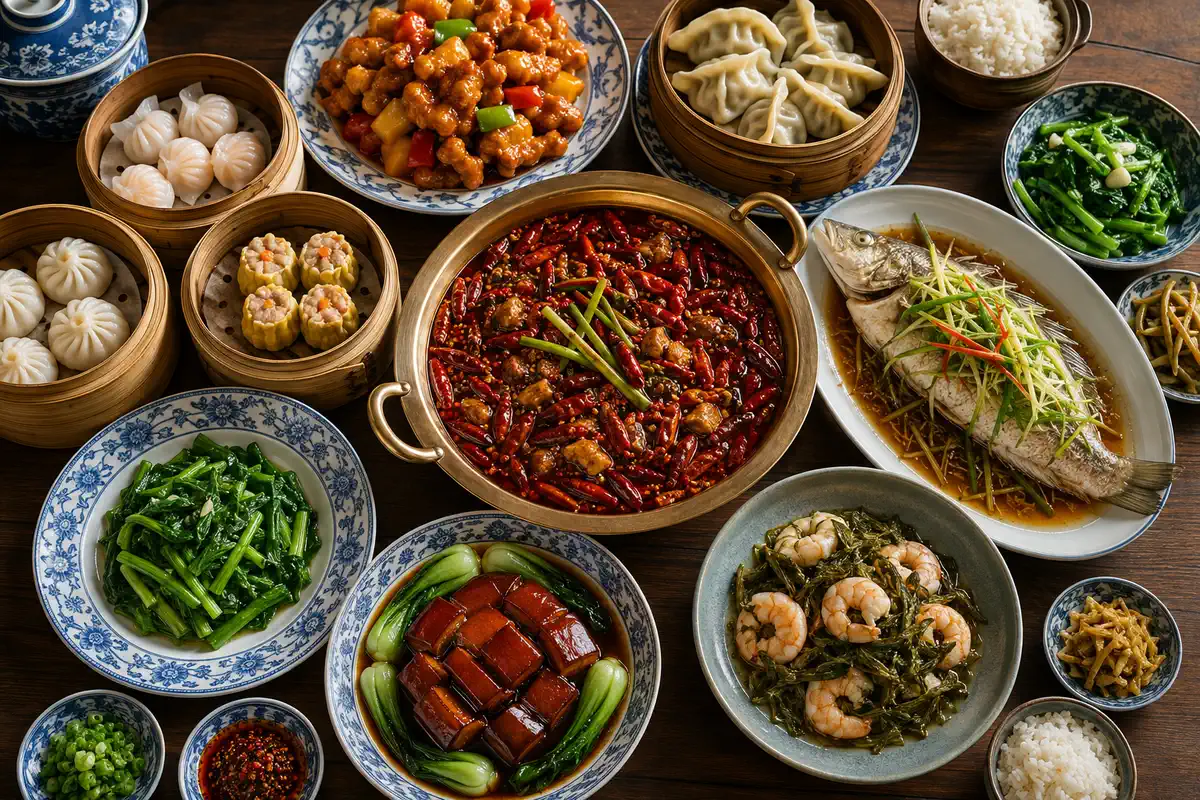
Chinese regional cuisines are far more varied than most visitors expect.
There is a moment almost every traveller to China experiences.
You are standing beside a busy street stall or sitting in a small local restaurant. Steam rises from a pot, the smell is incredible, and you have no idea what you are looking at—or how to ask about it.
You could point at something and hope for the best. Sometimes that works. But imagine being able to ask:
这个辣吗?
Zhège là ma?
Is this spicy?
Or:
你们有什么特色菜?
Nǐmen yǒu shénme tèsècài?
What speciality dishes do you have?
Even a small amount of Mandarin changes the experience. The person serving you may smile, explain what is fresh that day, warn you that a dish is extremely spicy, or suggest something you would never have chosen from a translated menu.
You are no longer simply looking at Chinese food from the outside. You are beginning to participate in the culture around it.
China has one of the world’s richest and most varied food traditions. Climate, geography, migration, trade, agriculture, religion and local history have all shaped the way people cook. A meal in Guangzhou can feel completely different from one in Chengdu, Qingdao, Hangzhou, Xi’an or Shenyang.
In this guide, we will explore China’s best-known regional cuisines, look at dishes worth recognising, and learn practical Mandarin that can help you order with more confidence.
How Chinese Food Became Personal for Me
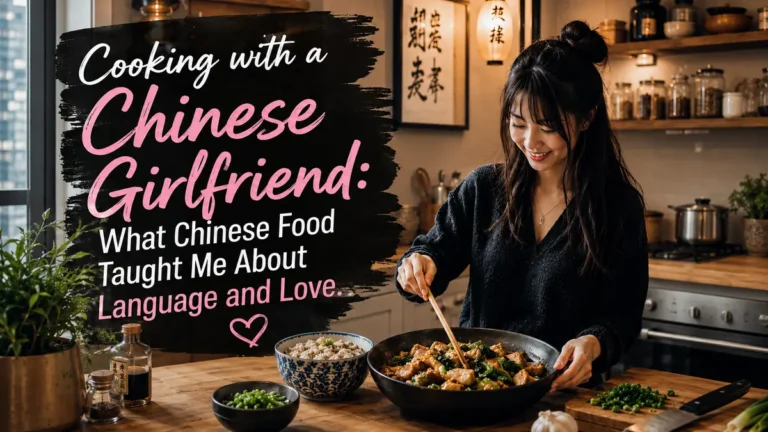
My girlfriend, Sunny, is from Shenyang in northeast China—an area commonly called 东北 (Dōngběi).
During my years in the Navy, I travelled widely around Asia and tried a great deal of Chinese food. I thought I already understood it fairly well. I was wrong.
Sunny still surprises me with dishes I have never tasted before. Some are hearty Dongbei classics; others are simple home-cooked meals that would rarely appear on a Western Chinese restaurant menu. Eating together has taught me that Chinese food is not only about famous restaurant dishes. It is also about family, memory, hospitality and the feeling of sharing a table.
That is one reason food and language fit together so naturally. A dish becomes easier to remember when you know its name, understand how it was cooked, and connect it with a real person or experience.
Are There Really Only Eight Chinese Cuisines?
You will often hear about China’s Eight Great Cuisines:
八大菜系
bā dà càixì
The standard list is:
- Sichuan cuisine — 四川菜 (Sìchuān cài) or 川菜 (Chuāncài)
- Cantonese cuisine — 粤菜 (Yuècài)
- Shandong cuisine — 鲁菜 (Lǔcài)
- Jiangsu cuisine — 苏菜 (Sūcài)
- Zhejiang cuisine — 浙菜 (Zhècài)
- Fujian cuisine — 闽菜 (Mǐncài)
- Hunan cuisine — 湘菜 (Xiāngcài)
- Anhui cuisine — 徽菜 (Huīcài)
This is a useful traditional framework, but it is not a complete map of Chinese food. It leaves out many important traditions, including Dongbei, Beijing, Shanghai, Yunnan, Guizhou, Shaanxi, Xinjiang and the cuisines of China’s many ethnic groups.
It is therefore better to think of the Eight Great Cuisines as a starting point—not a claim that China has only eight ways of cooking.
1. Sichuan Cuisine — 四川菜 (Sìchuān Cài)
More Than Just Heat
Sichuan cuisine is famous internationally for 麻辣 (málà): the combination of numbing Sichuan pepper and chilli heat.
麻 (má) describes the tingling or numbing sensation produced by Sichuan pepper, 花椒 (huājiāo).
辣 (là) means hot or spicy.
However, reducing Sichuan food to “very spicy food” misses much of its complexity. Sichuan cooking uses many carefully balanced flavour combinations, including sweet-and-sour, garlic, fermented broad-bean paste, pickled chilli, sesame and aromatic spices. Not every Sichuan dish is fiercely hot.
Famous Sichuan Dishes
- 麻婆豆腐 (mápó dòufu) — mapo tofu
- 宫保鸡丁 (gōngbǎo jīdīng) — Kung Pao diced chicken
- 担担面 (dàndàn miàn) — dan dan noodles
- 水煮牛肉 (shuǐzhǔ niúròu) — sliced beef cooked in a chilli-rich broth
- 火锅 (huǒguō) — hotpot, especially associated with Sichuan and Chongqing
A useful ordering phrase is:
我要一份麻婆豆腐,不要太辣。
Wǒ yào yī fèn mápó dòufu, bù yào tài là.
I’d like one serving of mapo tofu, not too spicy.
Sichuan hotpot is also a social event. Friends and family may sit around the pot for hours, adding meat, vegetables, tofu and noodles while talking and sharing drinks. Knowing even a little Mandarin helps you ask what is in the pot, choose the heat level and join the conversation.
What Does 夫妻肺片 Really Mean?
One Sichuan dish that causes confusion is:
夫妻肺片
fūqī fèipiàn
Its name is often translated literally as “husband-and-wife lung slices”. Despite that translation, the modern dish normally contains thinly sliced beef and beef offal such as tripe, tongue or heart—not lung.
The dish became associated with a husband-and-wife team of Chengdu street vendors in the early twentieth century. There are different accounts of how 肺片 (fèipiàn, “lung slices”) became part of the name, so it is safest not to present one colourful version of the story as proven fact. What is certain is that the name sounds far stranger in English than the dish itself.
2. Cantonese Cuisine — 粤菜 (Yuècài)
Fresh Ingredients and Precise Technique
Cantonese cuisine comes from Guangdong and includes several distinct local traditions, including Guangzhou, Chaoshan and Hakka cooking.
It is often described as light, but that does not mean bland. Cantonese cooks place great importance on ingredient quality, careful steaming, roasting, braising and precise wok cooking. Fresh seafood, poultry, pork, clear broths and seasonal vegetables all play major roles.
Famous Cantonese Foods
- 点心 (diǎnxīn) — dim sum, a broad family of small dishes rather than one dish
- 虾饺 (xiājiǎo) — shrimp dumplings, known in Cantonese as har gow
- 烧鹅 (shāo’é) — Cantonese roast goose
- 白切鸡 (báiqiē jī) — white-cut or plain-poached chicken
- 清蒸鱼 (qīngzhēng yú) — steamed fish
- 烧腊 (shāolà) — Cantonese roasted and preserved meats
Dim sum is closely connected with the southern Chinese tradition of drinking tea. In Mandarin this can be called 饮茶 (yǐnchá); the familiar English expression “yum cha” comes from Cantonese pronunciation.
To order a basket of shrimp dumplings, say:
我们要一笼虾饺,谢谢。
Wǒmen yào yī lóng xiājiǎo, xièxie.
We’d like one basket of shrimp dumplings, thank you.
3. Shandong Cuisine — 鲁菜 (Lǔcài)
Seafood, Stocks and Northern Influence
Shandong cuisine is one of China’s oldest and most influential regional traditions. Because Shandong has a long coastline, seafood is important, but the cuisine is also known for clear and milky stocks, braising, high-heat cooking, vinegar, garlic and generous use of spring onion.
Shandong cooking helped shape northern Chinese banquet and court cuisine, including culinary traditions that later developed in Beijing. Calling it simply “salty food” does not do it justice; good Shandong cooking aims for depth, freshness and savoury clarity.
Famous Shandong Dishes
- 糖醋鲤鱼 (tángcù lǐyú) — sweet-and-sour carp
- 葱烧海参 (cōngshāo hǎishēn) — sea cucumber braised with spring onion
- 德州扒鸡 (Dézhōu pájī) — Dezhou braised chicken
- 九转大肠 (jiǔzhuǎn dàcháng) — braised pork intestine in a complex sweet, sour and savoury sauce
To ask how something was prepared:
请问,这道菜是怎么做的?
Qǐngwèn, zhè dào cài shì zěnme zuò de?
Excuse me, how is this dish made?
4. Jiangsu Cuisine — 苏菜 (Sūcài)
Knife Skills, Texture and Elegant Presentation
Jiangsu cuisine includes several local styles. Huaiyang cuisine—centred on places such as Yangzhou, Huai’an and the lower Huai and Yangtze river areas—is particularly famous for refined knife work, carefully prepared stocks, tender textures and elegant presentation.
The flavours are often balanced and restrained, sometimes with a gentle sweetness, but Jiangsu cuisine is too varied to describe with a single flavour label.
Famous Jiangsu Dishes
- 狮子头 (shīzitóu) — “Lion’s Head” pork meatballs
- 文思豆腐 (wénsī dòufu) — tofu cut into extremely fine threads and served in soup
- 大煮干丝 (dàzhǔ gānsī) — finely shredded pressed tofu simmered in a savoury broth
- 松鼠鳜鱼 (sōngshǔ guìyú) — squirrel-shaped mandarin fish with a sweet-and-sour sauce
Wensi tofu is a perfect example of why Chinese cuisine cannot be understood only through ingredients. The dish is as much a demonstration of knife skill and patience as it is a tofu soup.
5. Zhejiang Cuisine — 浙菜 (Zhècài)
Seasonal, Fresh and Delicate
Zhejiang cuisine includes the cooking traditions of Hangzhou, Ningbo, Shaoxing and other parts of the province. It makes extensive use of seafood, freshwater fish, bamboo shoots, seasonal vegetables and Shaoxing rice wine.
Hangzhou cooking is often gentle and elegant. Ningbo is particularly known for seafood, while Shaoxing’s famous rice wine appears in both cooking and drinking culture.
Famous Zhejiang Dishes
- 东坡肉 (Dōngpō ròu) — slow-braised Dongpo pork
- 龙井虾仁 (Lóngjǐng xiārén) — shrimp cooked with Longjing tea leaves
- 西湖醋鱼 (Xīhú cùyú) — West Lake fish in vinegar sauce
- 宋嫂鱼羹 (Sòng sǎo yúgēng) — Sister Song’s fish soup
To ask about a well-known regional ingredient:
这是用绍兴酒做的吗?
Zhè shì yòng Shàoxīng jiǔ zuò de ma?
Is this made with Shaoxing wine?
6. Fujian Cuisine — 闽菜 (Mǐncài)
Seafood, Broths and Deep Savoury Flavour
Fujian’s mountains and long coastline give its cooks access to seafood, mushrooms, bamboo shoots and many aromatic ingredients. Soups and broths are especially important, as are red yeast rice, fermented seasonings, seafood-based umami and carefully balanced sweet-and-sour flavours.
Fujian cuisine is not one uniform style. Fuzhou, southern Fujian, western Fujian and other areas have their own ingredients and preferences.
Famous Fujian Dishes
- 佛跳墙 (Fó tiào qiáng) — “Buddha Jumps Over the Wall”, an elaborate banquet soup
- 沙茶面 (shāchá miàn) — Xiamen noodles in a rich, savoury shacha broth
- 荔枝肉 (lìzhī ròu) — sweet-and-sour pork cut to resemble lychees; it is not simply pork cooked with lychee fruit
- 海蛎煎 (hǎilì jiān) — oyster omelette
Migration from Fujian has had an enormous influence on Chinese food traditions in Taiwan and throughout Southeast Asia. Those overseas cuisines developed in their own directions, but their Fujian roots can still be seen in ingredients, cooking methods and dish names.
7. Hunan Cuisine — 湘菜 (Xiāngcài)
Chilli, Sourness, Smoke and Fermentation
Hunan food is often compared with Sichuan food because both can be very hot. The heat, however, is usually expressed differently.
Sichuan cuisine is strongly associated with the numbing-spicy combination 麻辣 (málà). Hunan cuisine makes wide use of fresh chillies, dried chillies, pickled chillies and fermented chilli products. Sour flavours, smoked foods and cured meats are also important.
It is therefore more accurate to describe Hunan cuisine as hot, aromatic, sour, smoky and deeply savoury—not simply as “pure chilli heat”.
Famous Hunan Dishes
- 剁椒鱼头 (duòjiāo yútóu) — steamed fish head covered with chopped pickled chillies
- 农家小炒肉 (nóngjiā xiǎochǎo ròu) — farmhouse-style stir-fried pork with chillies
- 毛氏红烧肉 (Máo shì hóngshāo ròu) — Mao-style red-braised pork
- 湘西腊肉 (Xiāngxī làròu) — cured or smoked pork from western Hunan
If you want less chilli, try:
能不能少放一点辣椒?
Néng bu néng shǎo fàng yìdiǎn làjiāo?
Could you use a little less chilli?
Be aware that “a little less” is relative. In a restaurant known for Hunan food, even the milder version may still be hot.
8. Anhui Cuisine — 徽菜 (Huīcài)
Mountain Ingredients, Fermentation and Slow Cooking
Anhui cuisine developed in and around the historic Huizhou region and the mountains of southern Anhui. It is known for braising, stewing, steaming and careful control of heat. Bamboo shoots, mushrooms, cured meats and preserved or fermented ingredients appear frequently.
Some famous Anhui dishes have strong aromas that can surprise first-time visitors. That does not mean they are spoiled. Controlled fermentation is often exactly what creates their distinctive flavour.
Famous Anhui Dishes
- 臭鳜鱼 (chòu guìyú) — fermented mandarin fish, famous for its strong smell and savoury taste
- 毛豆腐 (máo dòufu) — mould-ripened “hairy tofu” that is cooked before eating
- 问政山笋 (Wènzhèng shānsǔn) — Wenzheng mountain bamboo shoots
- 红烧划水 (hóngshāo huáshuǐ) — red-braised fishtail
These dishes show an important principle of Chinese food culture: aroma, texture and flavour are not always judged in the same way across cultures. Something unfamiliar is not automatically unpleasant—and sometimes the most challenging first bite becomes the dish you remember best.
Beyond the Eight: The Regional Food You Should Not Miss
The Eight Great Cuisines leave out a huge amount of China’s culinary diversity. A genuinely curious food traveller should also look beyond them.
Dongbei Cuisine — 东北菜 (Dōngběi Cài)
Dongbei includes Liaoning, Jilin and Heilongjiang in northeast China. Its food reflects cold winters, agriculture, preservation techniques and a mixture of Han, Manchu, Korean and other regional influences.
Meals are often hearty and generous. Stews, dumplings, pickled Chinese cabbage, pork, chicken, mushrooms, potatoes, maize and wheat-based foods are common.
Well-known dishes include:
- 锅包肉 (guōbāoròu) — crisp pork in a glossy sweet-and-sour sauce
- 地三鲜 (dì sān xiān) — potato, aubergine and green pepper
- 小鸡炖蘑菇 (xiǎojī dùn mógu) — chicken stewed with mushrooms
- 酸菜白肉 (suāncài báiròu) — pickled Chinese cabbage with sliced pork
Because Sunny comes from Shenyang, Dongbei food is the regional tradition I encounter most personally. It is filling, comforting and designed for sharing—the sort of food that makes a table feel like home.
Other Important Regional Traditions
- Beijing and northern China: roast duck, wheat noodles, dumplings and sesame-based sauces
- Shaanxi and Xi’an: hand-pulled and wide-cut noodles, 肉夹馍 (ròujiāmó) and richly spiced lamb dishes
- Shanghai: red-braised dishes, river and coastal ingredients, and a characteristic sweet-savoury balance
- Yunnan: wild mushrooms, herbs, flowers, cured meats and the food traditions of many ethnic groups
- Guizhou: sour broths, fermented ingredients and chilli
- Xinjiang: Uyghur and other Central Asian-influenced foods, including lamb skewers, 抓饭 (zhuāfàn, pilaf) and 馕 (náng, flatbread)
This is why the phrase “Chinese food” is both useful and misleading. It describes a national food culture, but it can hide enormous differences between provinces, cities, ethnic groups and individual households.
How Mandarin Helps You Understand a Menu
Many Chinese dish names tell you the main ingredient, cooking method or flavour. Learning a few common characters can turn an intimidating menu into something you can begin to decode.
Common Cooking Methods
- 炒 (chǎo) — stir-fried
- 蒸 (zhēng) — steamed
- 煮 (zhǔ) — boiled or cooked in liquid
- 炖 (dùn) — stewed or simmered
- 烤 (kǎo) — roasted or grilled
- 炸 (zhá) — deep-fried
- 红烧 (hóngshāo) — red-braised in a soy-based sauce
- 清蒸 (qīngzhēng) — steamed with light seasoning
- 凉拌 (liángbàn) — mixed and dressed cold
Common Ingredients
- 猪肉 (zhūròu) — pork
- 牛肉 (niúròu) — beef
- 羊肉 (yángròu) — lamb or mutton
- 鸡肉 (jīròu) — chicken
- 鱼 (yú) — fish
- 虾 (xiā) — shrimp or prawns
- 豆腐 (dòufu) — tofu
- 面 (miàn) — noodles or flour-based food, depending on context
- 米饭 (mǐfàn) — cooked rice
If you recognise 清蒸鱼 (qīngzhēng yú), you can work out that the dish is steamed fish. If you see 红烧牛肉 (hóngshāo niúròu), you know it is red-braised beef.
That small amount of language gives you far more control over what you order.
Essential Mandarin for Flavours
- 辣 (là) — spicy
- 麻 (má) — numbing or tingling
- 甜 (tián) — sweet
- 酸 (suān) — sour
- 苦 (kǔ) — bitter
- 咸 (xián) — salty
- 鲜 (xiān) — fresh or pleasantly savoury/umami, depending on context
- 香 (xiāng) — fragrant or appetisingly aromatic
- 清淡 (qīngdàn) — light and mildly seasoned
- 油腻 (yóunì) — greasy or overly rich
If you learn 辣 (là) while eating something extremely spicy, you will probably never forget it. Taste, smell and emotion give the word a memory that a flashcard alone cannot create.
Practical Mandarin Restaurant Phrases
Asking About the Food
这个是什么?
Zhège shì shénme?
What is this?
这是用什么做的?
Zhè shì yòng shénme zuò de?
What is this made from?
这个辣吗?
Zhège là ma?
Is this spicy?
你们有什么特色菜?
Nǐmen yǒu shénme tèsècài?
What speciality dishes do you have?
可以推荐一道菜吗?
Kěyǐ tuījiàn yī dào cài ma?
Could you recommend a dish?
Ordering
我要这个。
Wǒ yào zhège.
I’ll have this one.
麻烦给我看一下菜单。
Máfan gěi wǒ kàn yīxià càidān.
May I see the menu, please?
请给我们两碗米饭。
Qǐng gěi wǒmen liǎng wǎn mǐfàn.
Please give us two bowls of rice.
不要放香菜。
Bù yào fàng xiāngcài.
Please don’t add coriander.
Dietary Needs and Allergies
我不吃猪肉。
Wǒ bù chī zhūròu.
I don’t eat pork.
我是素食者,不吃肉,也不吃鱼。
Wǒ shì sùshízhě, bù chī ròu, yě bù chī yú.
I’m vegetarian. I don’t eat meat or fish.
我对花生严重过敏。
Wǒ duì huāshēng yánzhòng guòmǐn.
I have a severe peanut allergy.
If an allergy is serious, do not rely on one memorised sentence alone. Carry a clearly written allergy card and confirm possible ingredients in sauces, stocks and cooking oils.
At the End of the Meal
好吃!
Hǎochī!
Delicious!
麻烦结账。
Máfan jiézhàng.
The bill, please.
麻烦帮我打包。
Máfan bāng wǒ dǎbāo.
Could you please pack this to take away?
Why Food Is Such a Powerful Way to Learn Mandarin
Food gives language a real purpose. Instead of memorising a disconnected list, you learn words because you need them.
You want to know whether something is spicy. You want to order the noodles at the next table. You need to explain an allergy. You want to ask the cook why the fish smells unusual or what makes a sauce taste so good.
That creates several advantages:
- You remember vocabulary through taste, smell and emotion.
- You hear the same useful words repeatedly in natural situations.
- Menus teach you how characters combine into meaningful chunks.
- Short exchanges help you build speaking confidence.
- Food gives you an easy subject for starting conversations.
This is also where structured study can help. Rocket Chinese includes audio-based lessons and practice activities for listening and speaking, as well as material on ordering in a restaurant. I recommend it because it gives beginners an organised foundation they can practise before using the language in real situations.
Affiliate disclosure: If you purchase Rocket Chinese through my link, I may receive a commission at no extra cost to you. I only recommend resources I believe may genuinely help Mandarin learners.
No course can replace real interaction. However, a good course can give you the words and sentence patterns you need so that your first restaurant conversation does not begin from zero.
Final Thoughts: Eat, Explore and Speak
China’s food culture is far too varied to fit neatly into eight categories. Every province, city, market, restaurant and family kitchen adds another part to the story.
Learning Mandarin will not make you an expert on every dish. What it will do is help you ask better questions.
You can learn what an unfamiliar ingredient is. You can understand how something was cooked. You can ask for the local speciality instead of ordering the safest item on the translated menu. Most importantly, you can talk with the people who prepare and share the food.
That is when eating becomes more than consuming a meal. It becomes a way of understanding culture, building relationships and creating memories.
Learn a few phrases. Try the regional dish. Ask what the people beside you are eating.
And if someone warns you that the chilli is 特别辣 (tèbié là)—extremely spicy—it may be worth believing them.