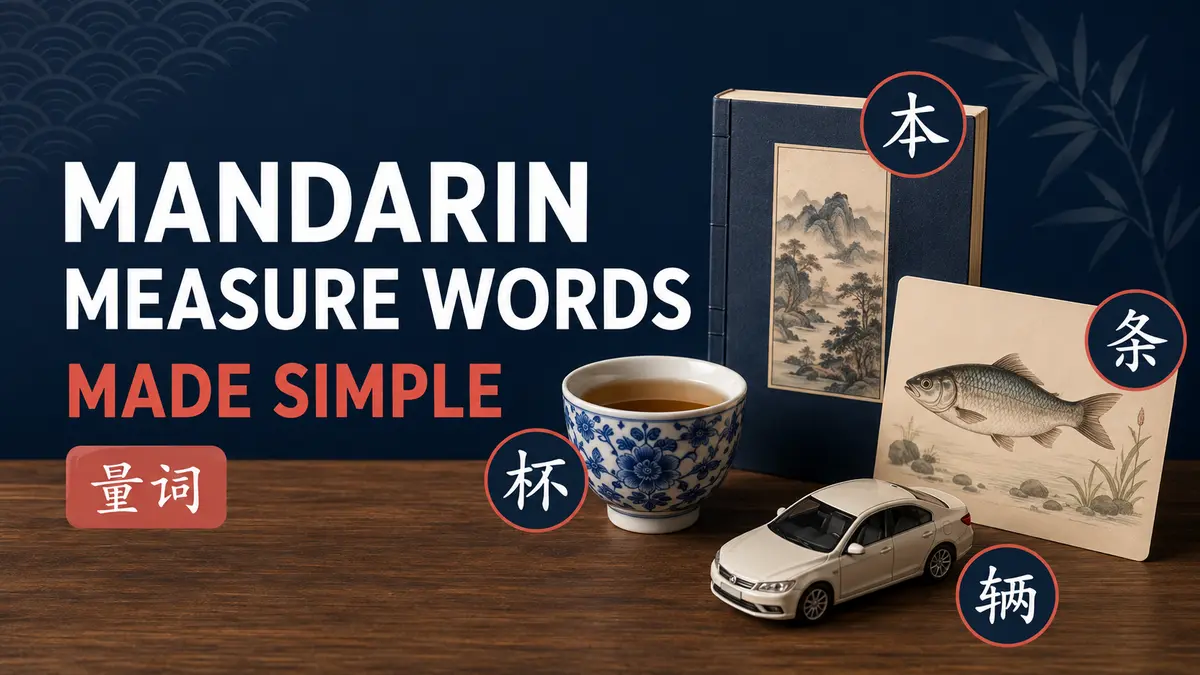
Mandarin measure words are often introduced as a long list that beginners are expected to memorise. That makes them look far more difficult than they really are.
In everyday Mandarin, the same small group of measure words appears again and again. Learn those first, attach each one to a useful noun, and the pattern soon becomes familiar.
As an English-speaking learner, I found measure words much easier once I stopped treating them as isolated vocabulary and started learning complete combinations.
For example, English allows us to say “three books.” In Mandarin, a measure word normally sits between the number and the noun:
三本书 (sān běn shū) — three books
Here, 本 (běn) is the measure word used for books and other bound items.
Measure words are not optional extras. They are part of the normal structure of Mandarin. However, you do not need to learn hundreds of them before you can speak. This guide focuses on the measure words beginners will use most, how they fit into a sentence and how to remember them naturally.
What Is a Mandarin Measure Word?
In Mandarin, measure words and classifiers are called 量词 (liàngcí).
English uses similar expressions when we say:
- a cup of tea
- a piece of cake
- a bottle of water
- a pair of shoes
Mandarin uses this kind of structure much more often. A number is not normally placed directly before a noun. It is followed by an appropriate measure word.
The basic pattern is:
Number + Measure Word + Noun
For example:
三本书 (sān běn shū) — three books
- 三 (sān) — three
- 本 (běn) — measure word for books
- 书 (shū) — book
Another common example is:
两杯咖啡 (liǎng bēi kāfēi) — two cups of coffee
The word 杯 (bēi) tells us that the coffee is being counted by the cup.
Measure Words Also Follow “This,” “That” and “Which”
Measure words are not only used with numbers. They also commonly appear after:
- 这 (zhè) — this
- 那 (nà) — that
- 哪 (nǎ) — which
The pattern becomes:
This, That or Which + Measure Word + Noun
For example:
这个人 (zhè ge rén) — this person
那本书 (nà běn shū) — that book
哪杯茶? (Nǎ bēi chá?) — Which cup of tea?
This is why it is better to learn a noun together with its measure word. If you learn 本书 (běn shū) as a familiar combination, phrases such as 一本书 (yì běn shū), 这本书 (zhè běn shū) and 哪本书 (nǎ běn shū) become much easier to produce.
Start With These Essential Measure Words
You will eventually meet many Mandarin measure words, but the following ones cover a large amount of everyday beginner conversation.
个 — gè
个 (gè) is the most common general measure word in Mandarin. In natural speech, it is often pronounced lightly as ge.
It is used for people, many everyday objects, ideas, questions and periods of time measured in months.
一个人 (yí ge rén) — one person
三个苹果 (sān ge píngguǒ) — three apples
四个问题 (sì ge wèntí) — four questions
五个月 (wǔ ge yuè) — five months
When you cannot remember a more specific measure word, 个 will often help you communicate. It may not always sound precise, but the listener will usually understand you.
本 — běn
本 (běn) is used for bound printed items, including books, notebooks, magazines, dictionaries and passports.
一本书 (yì běn shū) — one book
两本词典 (liǎng běn cídiǎn) — two dictionaries
三本杂志 (sān běn zázhì) — three magazines
张 — zhāng
张 (zhāng) is used for many flat objects and objects with a broad surface.
Common examples include paper, tickets, photographs, maps, tables, beds and faces.
一张纸 (yì zhāng zhǐ) — one sheet of paper
两张票 (liǎng zhāng piào) — two tickets
三张照片 (sān zhāng zhàopiàn) — three photographs
条 — tiáo
条 (tiáo) is commonly used for long, narrow or flexible things. It is also used for fish and certain long animals.
一条路 (yì tiáo lù) — one road
两条鱼 (liǎng tiáo yú) — two fish
三条裤子 (sān tiáo kùzi) — three pairs of trousers
You will also hear 条 with rivers, snakes, messages and news items.
只 — zhī
只 (zhī) is the most useful general measure word for animals.
一只猫 (yì zhī māo) — one cat
两只狗 (liǎng zhī gǒu) — two dogs
三只鸟 (sān zhī niǎo) — three birds
It can also count one member of a pair:
一只鞋 (yì zhī xié) — one shoe
一只手 (yì zhī shǒu) — one hand
件 — jiàn
件 (jiàn) is used for items of clothing and for matters, events or pieces of work.
一件衣服 (yí jiàn yīfu) — one item of clothing
两件事 (liǎng jiàn shì) — two matters or things
三件行李 (sān jiàn xíngli) — three pieces of luggage
杯 — bēi
杯 (bēi) counts cups or glasses of a drink.
一杯茶 (yì bēi chá) — one cup of tea
两杯咖啡 (liǎng bēi kāfēi) — two cups of coffee
三杯水 (sān bēi shuǐ) — three glasses of water
瓶 — píng
瓶 (píng) counts bottles.
一瓶水 (yì píng shuǐ) — one bottle of water
两瓶牛奶 (liǎng píng niúnǎi) — two bottles of milk
三瓶饮料 (sān píng yǐnliào) — three bottled drinks
碗 — wǎn
碗 (wǎn) counts bowls of food or drink.
一碗米饭 (yì wǎn mǐfàn) — one bowl of rice
两碗面 (liǎng wǎn miàn) — two bowls of noodles
三碗汤 (sān wǎn tāng) — three bowls of soup
辆 — liàng
辆 (liàng) is used for wheeled vehicles, including cars, buses, bicycles, motorcycles and trucks.
一辆车 (yí liàng chē) — one vehicle
两辆汽车 (liǎng liàng qìchē) — two cars
三辆自行车 (sān liàng zìxíngchē) — three bicycles
位 — wèi
位 (wèi) is a polite and respectful measure word for people.
It is useful when referring to guests, customers, teachers, doctors and people you do not know well.
一位老师 (yí wèi lǎoshī) — one teacher
两位客人 (liǎng wèi kèrén) — two guests
三位医生 (sān wèi yīshēng) — three doctors
Compare:
一个老师 (yí ge lǎoshī) — one teacher; neutral
一位老师 (yí wèi lǎoshī) — one teacher; more respectful
次 — cì
次 (cì) counts how many times an action or event occurs.
一次 (yí cì) — once
两次 (liǎng cì) — twice
三次 (sān cì) — three times
我去过中国两次。 (Wǒ qùguo Zhōngguó liǎng cì.) — I have been to China twice.
Unlike the noun measure words above, 次 often appears after the action it is counting.
Why Does 一 Sometimes Sound Like Yí or Yì?
The dictionary pronunciation of 一 is yī. However, its tone normally changes in connected speech.
- Before a fourth-tone syllable, 一 usually becomes yí
- Before a first-, second- or third-tone syllable, 一 usually becomes yì
- When counting or saying the number by itself, it remains yī
That is why the examples in this guide include:
一个人 (yí ge rén) — one person
一本书 (yì běn shū) — one book
The character does not change. Only its spoken tone changes.
Should You Use 两 or 二 for “Two”?
Mandarin has two common words for the number two:
- 两 (liǎng)
- 二 (èr)
Before most measure words, use 两 (liǎng):
两个人 (liǎng ge rén) — two people
两本书 (liǎng běn shū) — two books
两杯茶 (liǎng bēi chá) — two cups of tea
Use 二 (èr) when counting, reading individual digits, giving telephone or room numbers, saying dates, forming ordinal numbers or building larger numbers.
一、二、三 (yī, èr, sān) — one, two, three
二月 (èryuè) — February
二十二 (èrshí’èr) — twenty-two
第二个问题 (dì-èr ge wèntí) — the second question
A useful beginner rule is: use 两 directly before most measure words and use 二 when you are counting or treating two as a number.
The Measure Word Can Change the Meaning
A noun does not always have only one possible measure word. The choice can show how the speaker is viewing or presenting it.
Consider fish:
一条鱼 (yì tiáo yú) — one fish
Here, the fish is being counted as an animal.
一盘鱼 (yì pán yú) — one plate of fish
Now it is being presented as a prepared dish.
The same idea works with tea:
一杯茶 (yì bēi chá) — one cup of tea
一壶茶 (yì hú chá) — one pot of tea
The noun 茶 (chá) has not changed. The measure word tells us how the tea is being served.
Useful Measure Words to Learn Next
Once the essential group feels familiar, add a few more that match your daily life.
双 — shuāng
Used for matching physical pairs.
一双鞋 (yì shuāng xié) — a pair of shoes
一双袜子 (yì shuāng wàzi) — a pair of socks
对 — duì
Used for people or things that form a couple or complementary pair.
一对夫妻 (yí duì fūqī) — a married couple
一对耳环 (yí duì ěrhuán) — a pair of earrings
份 — fèn
Used for portions, documents, copies and certain jobs.
一份工作 (yí fèn gōngzuò) — one job
两份文件 (liǎng fèn wénjiàn) — two documents
块 — kuài
Used for pieces, chunks and blocks. It is also a common informal way to count yuan.
一块蛋糕 (yí kuài dàngāo) — one piece of cake
十块钱 (shí kuài qián) — ten yuan
口 — kǒu
Used to count members of a family or household.
我家有四口人。 (Wǒ jiā yǒu sì kǒu rén.) — There are four people in my family.
座 — zuò
Used for large, fixed structures and natural features such as mountains, bridges and large buildings.
一座山 (yí zuò shān) — one mountain
两座桥 (liǎng zuò qiáo) — two bridges
场 — chǎng
Used for organised events, performances, matches and some weather events.
一场比赛 (yì chǎng bǐsài) — one match
一场雨 (yì chǎng yǔ) — a period of rain
Time Words Do Not All Need a Measure Word
Some common time words can follow a number directly:
三年 (sān nián) — three years
两天 (liǎng tiān) — two days
Durations measured in months normally use 个:
五个月 (wǔ ge yuè) — five months
Compare that with:
五月 (wǔyuè) — May
Removing 个 changes the meaning from a five-month duration to the name of a month.
Common Problems Beginners Have
Leaving Out the Measure Word
English speakers naturally want to place the number directly before the noun.
Less natural Mandarin:
三书 (sān shū)
Natural Mandarin:
三本书 (sān běn shū) — three books
Using 二 Before Every Measure Word
Because 二 means two, beginners often try to use it everywhere.
Less natural Mandarin:
二个人 (èr ge rén)
Natural Mandarin:
两个人 (liǎng ge rén) — two people
Memorising the Measure Word by Itself
Learning “本 means the measure word for books” is useful, but it is not enough to make the phrase automatic.
Learn complete combinations instead:
一本书 (yì běn shū) — one book
两本书 (liǎng běn shū) — two books
这本书 (zhè běn shū) — this book
Being Afraid to Use the Wrong One
Using the wrong measure word occasionally will not stop the conversation.
If you forget the specific word, use 个 (gè) and finish your sentence. Then check the more natural measure word later. Communication comes first; precision develops through repeated use.
A Better Way to Learn Measure Words
Learn the Whole Phrase
Instead of memorising 本 (běn) by itself, learn 一本书 (yì běn shū).
Instead of memorising 杯 (bēi) by itself, learn 一杯茶 (yì bēi chá).
The complete phrase gives you a sound pattern that is easier to recall in conversation.
Group Similar Ideas Together
Create small groups rather than one enormous list:
- books — 本 (běn)
- flat things — 张 (zhāng)
- long things — 条 (tiáo)
- animals — 只 (zhī)
- clothing — 件 (jiàn)
- vehicles — 辆 (liàng)
- cups — 杯 (bēi)
Change the Number
Practise the same combination with different numbers:
一本书 (yì běn shū) — one book
两本书 (liǎng běn shū) — two books
三本书 (sān běn shū) — three books
This also helps you become comfortable changing between 一 (yī), 两 (liǎng) and other numbers.
Practise With 这 (zhè), 那 (nà) and 哪 (nǎ)
Numbers are only one part of the pattern.
这本书 (zhè běn shū) — this book
那本书 (nà běn shū) — that book
哪本书? (Nǎ běn shū?) — Which book?
Listen for Complete Combinations
When listening to Mandarin, notice the measure word and noun together:
- 一个人 (yí ge rén)
- 两本书 (liǎng běn shū)
- 三杯茶 (sān bēi chá)
- 这辆车 (zhè liàng chē)
- 那只狗 (nà zhī gǒu)
After hearing the same combinations repeatedly, the correct measure word will begin to sound natural.
Quick Reference
- 个 (gè) — general measure word
- 本 (běn) — books and bound items
- 张 (zhāng) — flat or broad objects
- 条 (tiáo) — long, narrow or flexible things
- 只 (zhī) — animals and one item from a pair
- 件 (jiàn) — clothing, matters and pieces of work
- 杯 (bēi) — cups and glasses
- 瓶 (píng) — bottles
- 碗 (wǎn) — bowls
- 辆 (liàng) — wheeled vehicles
- 位 (wèi) — people, used respectfully
- 次 (cì) — occurrences
Take Your Mandarin Further
Measure words become much easier when you hear them repeatedly in complete sentences and real conversations.
A structured course can help you combine grammar with listening, pronunciation, vocabulary and speaking practice.
Rocket Chinese includes native-speaker recordings, pronunciation practice, conversation activities, review exercises, downloadable audio and lessons covering Chinese reading and writing. It also offers a free trial without requiring a credit card.
Affiliate disclosure: If you sign up through this link, I may earn a commission at no extra cost to you.
Final Thoughts
Mandarin measure words are not a collection of rules you need to master before speaking. They are recurring patterns that become easier each time you hear and use them.
Begin with a small practical group: 个, 本, 张, 条, 只, 件, 杯 and 辆. Learn each one inside a complete phrase and use it with different numbers.
Do not wait until every measure word is perfect. Use the Mandarin you know, notice the combinations native speakers use and add new measure words gradually.
加油! (Jiāyóu!) — Keep going!
If you are planning your study routine, you may also enjoy How Long Does It Really Take to Learn Mandarin?