
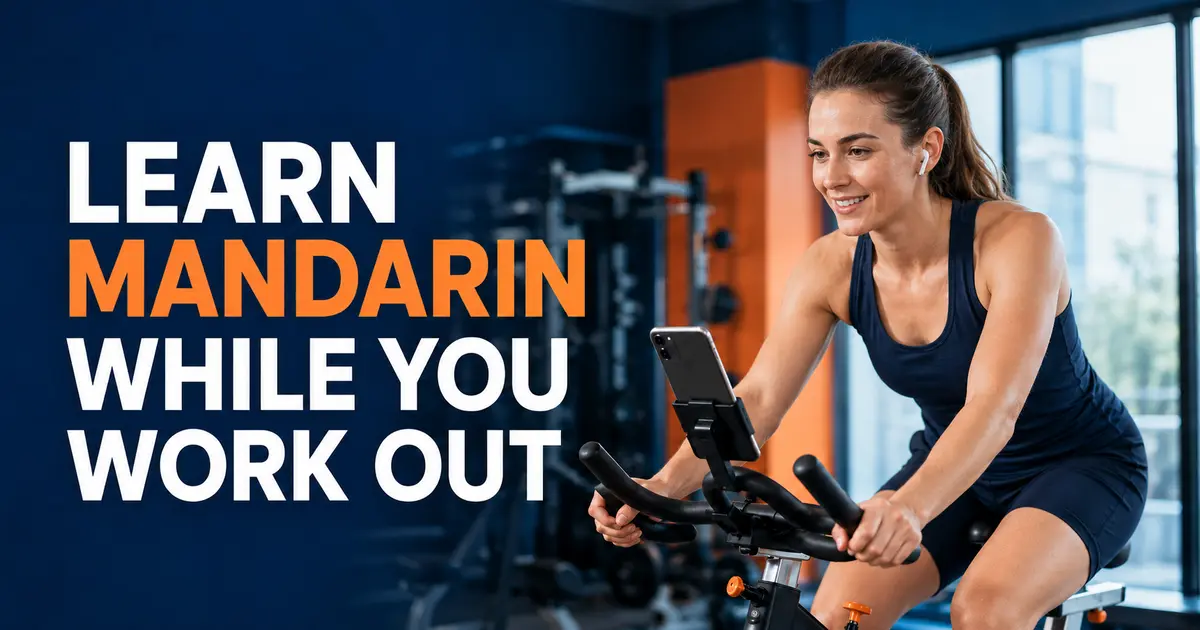
I want to tell you about one of the strangest places I have ever practised Mandarin tones.
The gym.
Not in a classroom. Not hunched over flashcards at 11 p.m. Not even in front of a YouTube video with a cup of tea. I was walking on a treadmill, quietly repeating mā, má, mǎ, mà while the person beside me slowly edged away.
The surprising part was that I remembered the words afterwards.
Exercise is not a shortcut to fluent Mandarin, and listening to a lesson while working out will not make the language enter your brain automatically. However, combining movement with the right kind of study can help you practise more consistently and make better use of time that might otherwise be lost.
In this guide, I will show you safe, practical ways to learn Chinese while you work out. You will also learn useful Mandarin vocabulary for running, strength training, swimming, cycling, recovery and more.
Affiliate disclosure: This article contains affiliate links. If you purchase Rocket Chinese through one of these links, I may earn a commission at no additional cost to you. I only recommend resources I have personally used and found helpful.
The Safety Rule: Match the Study Task to the Workout
Language practice works best during low-risk, repetitive activity—not when the exercise demands your full concentration.
Good times to combine Mandarin with movement include:
- Walking
- Easy treadmill sessions
- Gentle stationary cycling
- Warm-ups and cool-downs
- Mobility work and stretching
- Safe rest periods between sets
- Reviewing vocabulary immediately before and after swimming
Avoid looking at a screen while road cycling, running near traffic, using moving gym equipment or lifting heavy weights. Do not let headphones reduce your awareness of vehicles, people or instructions around you. During hard intervals, technical lifts or demanding swim sets, focus on the workout.
If speaking interferes with your breathing, save pronunciation practice for the warm-up, cool-down or walk home.
Essential Mandarin Fitness Words
Start with these general words before learning activity-specific vocabulary:
- 运动 (yùndòng) — exercise, sport or physical activity
- 锻炼 (duànliàn) — to exercise or train the body
- 健身 (jiànshēn) — fitness; to work out
- 健身房 (jiànshēnfáng) — gym or fitness centre
- 训练 (xùnliàn) — training; to train
- 教练 (jiàoliàn) — coach or trainer
- 热身 (rèshēn) — warm-up; to warm up
- 拉伸 (lāshēn) — stretching; to stretch
- 休息 (xiūxi) — rest; to rest
- 放松 (fàngsōng) — to relax or loosen up
- 坚持 (jiānchí) — to persist or keep going
- 健康 (jiànkāng) — health; healthy
Running and Cardio Vocabulary
Walking or easy cardio is one of the simplest times to listen to beginner Mandarin. Choose short material that you can partly understand and replay it instead of constantly switching to something new.
Useful words include:
- 跑步 (pǎobù) — to run; running
- 慢跑 (mànpǎo) — to jog; jogging
- 冲刺 (chōngcì) — to sprint; a sprint
- 跑步机 (pǎobùjī) — treadmill
- 跑道 (pǎodào) — running track
- 配速 (pèisù) — running pace
- 心率 (xīnlǜ) — heart rate
- 呼吸 (hūxī) — breath; to breathe
- 耐力 (nàilì) — endurance
- 有氧运动 (yǒuyǎng yùndòng) — aerobic exercise or cardio
- 间歇训练 (jiànxiē xùnliàn) — interval training
- 越野跑 (yuèyě pǎo) — trail running or cross-country running
Useful Running Phrases
我每天早上跑步。
Wǒ měitiān zǎoshang pǎobù.
I run every morning.
我今天跑了五公里。
Wǒ jīntiān pǎo le wǔ gōnglǐ.
I ran five kilometres today.
你的配速是多少?
Nǐ de pèisù shì duōshao?
What is your pace?
我在为马拉松做准备。
Wǒ zài wèi mǎlāsōng zuò zhǔnbèi.
I am preparing for a marathon.
今天跑得很累。
Jīntiān pǎo de hěn lèi.
Today’s run was tiring.
我的腿很酸。
Wǒ de tuǐ hěn suān.
My legs are sore.
A Better Way to Study While Running
During an easy walk or treadmill session, try one of these:
- Listen to a short dialogue once without stopping.
- Listen again and notice words you recognise.
- During the cool-down, repeat two or three complete sentences.
- After the workout, check the transcript and review anything you missed.
Do not cycle randomly through every tone of every syllable. It is more useful to imitate real words and complete phrases with accurate audio.
Strength Training and Gym Vocabulary
Rest periods can be useful for quick review, provided you still pay attention to your recovery and surroundings. Keep the task short: recall five words, say one sentence quietly or review a few flashcards.
Useful strength-training terms include:
- 力量训练 (lìliàng xùnliàn) — strength training
- 深蹲 (shēndūn) — squat
- 卧推 (wòtuī) — bench press
- 硬拉 (yìnglā) — deadlift
- 引体向上 (yǐntǐ xiàngshàng) — pull-up
- 俯卧撑 (fǔwòchēng) — push-up
- 平板支撑 (píngbǎn zhīchēng) — plank
- 哑铃 (yǎlíng) — dumbbell
- 杠铃 (gànglíng) — barbell
- 壶铃 (húlíng) — kettlebell
- 组 (zǔ) — set
- 次 (cì) — repetition or time
- 重量 (zhòngliàng) — weight or load
- 肌肉 (jīròu) — muscle
- 姿势 (zīshì) — posture, position or form
举重 (jǔzhòng) usually refers more specifically to weightlifting as a sport, including Olympic weightlifting. For general gym-based strength work, 力量训练 is often clearer.
Useful Gym Phrases
这个器械有人在用吗?
Zhège qìxiè yǒu rén zài yòng ma?
Is anyone using this machine?
你还剩几组?
Nǐ hái shèng jǐ zǔ?
How many sets do you have left?
能帮我保护一下吗?
Néng bāng wǒ bǎohù yíxià ma?
Can you spot me?
In a gym context, 保护 (bǎohù) can refer to spotting or assisting someone for safety. If there is any doubt, gesture towards the lift and explain what you need.
我今天练腿。
Wǒ jīntiān liàn tuǐ.
I am training legs today.
我做四组,每组十次。
Wǒ zuò sì zǔ, měi zǔ shí cì.
I am doing four sets of ten repetitions.
这个重量太重了。
Zhège zhòngliàng tài zhòng le.
This weight is too heavy.
我的姿势对吗?
Wǒ de zīshì duì ma?
Is my form correct?
我需要休息两分钟。
Wǒ xūyào xiūxi liǎng fēnzhōng.
I need to rest for two minutes.
Body Parts Used in Fitness
- 胸肌 (xiōngjī) — chest or pectoral muscles
- 背部 (bèibù) — back
- 肩膀 (jiānbǎng) — shoulders
- 手臂 (shǒubì) — arms
- 二头肌 (èrtóujī) — biceps
- 三头肌 (sāntóujī) — triceps
- 核心肌群 (héxīn jīqún) — core muscles
- 大腿 (dàtuǐ) — thighs
- 小腿 (xiǎotuǐ) — lower legs or calves
- 臀部 (túnbù) — glutes or buttocks
- 膝盖 (xīgài) — knee
- 关节 (guānjié) — joint
HIIT and Group-Fitness Vocabulary
Group classes are useful language environments because instructions are short, repeated and connected to visible actions.
- 高强度间歇训练 (gāo qiángdù jiànxiē xùnliàn) — high-intensity interval training
- 循环训练 (xúnhuán xùnliàn) — circuit training
- 波比跳 (bōbǐtiào) — burpee
- 开合跳 (kāihétiào) — jumping jack
- 高抬腿 (gāotáituǐ) — high knees
- 登山跑 (dēngshānpǎo) — mountain climbers
- 跳绳 (tiàoshéng) — skipping or jumping rope
- 跳箱 (tiàoxiāng) — box jump
- 战绳 (zhànshéng) — battle ropes
- 弹力带 (tánlìdài) — resistance band
- 泡沫轴 (pàomòzhóu) — foam roller
Common Instructor Commands
- 开始!(Kāishǐ!) — Start!
- 停!(Tíng!) — Stop!
- 休息三十秒。(Xiūxi sānshí miǎo.) — Rest for 30 seconds.
- 再做一组。(Zài zuò yì zǔ.) — Do one more set.
- 注意姿势。(Zhùyì zīshì.) — Pay attention to your form.
- 再坚持一下!(Zài jiānchí yíxià!) — Keep going a little longer!
- 最后十秒!(Zuìhòu shí miǎo!) — Last ten seconds!
- 加油!(Jiāyóu!) — Come on! You’ve got this!
Swimming Vocabulary
Swimming itself is not the best time for divided attention. Concentrate on breathing, technique, other swimmers and the coach’s instructions. A better approach is to review five words before entering the pool and test yourself on the same words after the session.
- 游泳 (yóuyǒng) — to swim; swimming
- 游泳池 (yóuyǒngchí) — swimming pool
- 自由泳 (zìyóuyǒng) — freestyle or front crawl
- 蛙泳 (wāyǒng) — breaststroke
- 蝶泳 (diéyǒng) — butterfly
- 仰泳 (yǎngyǒng) — backstroke
- 泳道 (yǒngdào) — swimming lane
- 泳帽 (yǒngmào) — swimming cap
- 泳镜 (yǒngjìng) — swimming goggles
- 打腿板 (dǎtuǐbǎn) — kickboard
- 换气 (huànqì) — to take a breath while swimming
- 一趟 (yí tàng) — one length of the pool
- 一个来回 (yí ge láihuí) — one trip there and back
English speakers use lap in different ways. In Chinese, 一趟 commonly means one length, while 一个来回 makes an out-and-back distance clear.
Cycling Vocabulary
A stationary bike can work well for listening or reviewing a transcript because the environment is controlled. Road cycling is different: never watch a screen, and do not use audio if it reduces your awareness. Follow local laws and prioritise safety.
- 骑自行车 (qí zìxíngchē) — to ride a bicycle
- 自行车 (zìxíngchē) — bicycle
- 公路自行车 (gōnglù zìxíngchē) — road bike
- 山地自行车 (shāndì zìxíngchē) — mountain bike
- 动感单车 (dònggǎn dānchē) — spin bike or indoor cycling
- 踏频 (tàpín) — cadence
- 功率 (gōnglǜ) — power output
- 爬坡 (pápō) — to climb a hill
- 下坡 (xiàpō) — to descend or go downhill
- 骑行距离 (qíxíng jùlí) — cycling distance
- 头盔 (tóukuī) — helmet
Notice that 爬坡 is pronounced pápō, not páipō.
Yoga, Pilates and Flexibility Vocabulary
Gentle mobility work or a cool-down can be a comfortable time to replay familiar audio. New, demanding material may still require a quieter study session later.
- 瑜伽 (yújiā) — yoga
- 普拉提 (pǔlātí) — Pilates
- 拉伸 (lāshēn) — to stretch; stretching
- 柔韧性 (róurènxìng) — flexibility
- 冥想 (míngxiǎng) — meditation
- 呼吸练习 (hūxī liànxí) — breathing exercise
- 平衡 (pínghéng) — balance
- 核心稳定 (héxīn wěndìng) — core stability
- 下犬式 (xiàquǎn shì) — downward-facing dog
- 战士式 (zhànshì shì) — warrior pose
- 树式 (shù shì) — tree pose
- 婴儿式 (yīng’ér shì) — child’s pose
- 垫子 (diànzi) — mat
Sports and Outdoor Activities
Sport can give you a natural reason to use Mandarin with other people. These common activity names are a useful starting point:
- 足球 (zúqiú) — football or soccer
- 篮球 (lánqiú) — basketball
- 羽毛球 (yǔmáoqiú) — badminton
- 乒乓球 (pīngpāngqiú) — table tennis
- 网球 (wǎngqiú) — tennis
- 太极拳 (tàijíquán) — tai chi
- 武术 (wǔshù) — Chinese martial arts
- 拳击 (quánjī) — boxing
- 散打 (sǎndǎ) — sanda or Chinese kickboxing
- 徒步 (túbù) — hiking or travelling on foot
- 爬山 (páshān) — hiking in the mountains or mountain climbing
- 攀岩 (pānyán) — rock climbing
Health, Recovery and Nutrition Vocabulary
- 身体 (shēntǐ) — body; physical health
- 体重 (tǐzhòng) — body weight
- 体脂率 (tǐzhīlǜ) — body-fat percentage
- 恢复 (huīfù) — recovery; to recover
- 睡眠 (shuìmián) — sleep
- 补水 (bǔshuǐ) — to hydrate or replace fluids
- 受伤 (shòushāng) — to be injured
- 拉伤 (lāshāng) — to strain a muscle
- 扭伤 (niǔshāng) — to sprain
- 疼痛 (téngtòng) — pain
- 蛋白质 (dànbáizhì) — protein
- 碳水化合物 (tànshuǐ huàhéwù) — carbohydrate
- 脂肪 (zhīfáng) — fat
- 热量 (rèliàng) — calories or energy
Useful Health and Recovery Phrases
我的膝盖有点疼。
Wǒ de xīgài yǒudiǎn téng.
My knee is a little sore.
我需要多喝水。
Wǒ xūyào duō hē shuǐ.
I need to drink more water.
我的体力越来越好了。
Wǒ de tǐlì yuè lái yuè hǎo le.
My stamina is getting better and better.
我需要休息两天。
Wǒ xūyào xiūxi liǎng tiān.
I need to rest for two days.
我最近有点训练过度了。
Wǒ zuìjìn yǒudiǎn xùnliàn guòdù le.
I have been training a little too much recently.
你喝蛋白粉吗?
Nǐ hē dànbáifěn ma?
Do you drink protein powder?
A Practical Fitness-and-Mandarin Routine
You do not need to study during every workout. Choose moments when language practice does not reduce safety or training quality.
Strength Day
- Review five words during selected rest periods.
- Count one warm-up set in Mandarin: 一、二、三、四……
- Replay a familiar dialogue during the cool-down.
Walking or Easy Cardio Day
- Listen to one short Mandarin lesson.
- Replay it instead of immediately starting another.
- Repeat two useful sentences after finishing.
Swimming Day
- Review five swimming words before entering the pool.
- Give the swim your full attention.
- Test yourself on the same words after changing.
Stationary-Bike Day
- Listen to learner-level audio at an easy intensity.
- If it is safe, read the transcript during the cool-down—not during hard intervals.
- Write down three phrases worth reviewing later.
Recovery Day
- Complete a focused 15- to 20-minute lesson while seated.
- Take an easy walk and mentally reuse the sentences.
- Write two or three lines about your week in simple Mandarin.
This approach does not eliminate study time. You will still need focused sessions for characters, grammar, careful pronunciation and challenging listening. It simply adds useful exposure to a routine you already have.
Why I Use Rocket Chinese With This Approach
I recommend Rocket Chinese because its structured lessons remove much of the uncertainty about what to study next. The course includes interactive audio lessons, practice conversations, language and culture lessons, writing lessons and review activities.
Some of the audio material can fit well into walking, gentle cardio or stretching. However, Rocket Chinese is not entirely hands-free. Speaking exercises, writing work and many review activities are better completed when you can safely use the screen and give the lesson your full attention.
That is how I suggest using it:
- Listen to familiar audio during suitable workouts.
- Complete new lessons when you can concentrate properly.
- Review useful phrases during low-risk rest periods.
- Combine the course with real conversations and feedback.
Rocket Chinese also offers lifetime access to purchased courses, which suits learners whose training, work or family commitments sometimes interrupt their routine.
If you are interested, try the Rocket Chinese free trial and see whether the lesson style suits you before buying anything.
The Mindset Connection
Fitness and language learning are not biologically identical, but they do reward some of the same behaviours.
One long workout cannot create lasting fitness, and one long study session cannot create conversational Mandarin. Progress comes from repeated practice, adequate recovery and gradually increasing the challenge.
Useful mindset words include:
- 坚持 (jiānchí) — to persist or stick with something
- 努力 (nǔlì) — to work hard; effort
- 进步 (jìnbù) — progress or improvement
- 目标 (mùbiāo) — goal or target
- 挑战 (tiǎozhàn) — challenge; to challenge
- 突破 (tūpò) — breakthrough; to break through
- 自律 (zìlǜ) — self-discipline
- 毅力 (yìlì) — perseverance
- 放弃 (fàngqì) — to give up
- 加油 (jiāyóu) — come on; keep going
Final Thoughts
The most useful fitness word in this article may be 坚持 (jiānchí): persist, keep going and do not give up.
It does not promise a hack. It simply reminds you to return tomorrow and continue the work.
If you already walk, run, lift, swim or cycle regularly, you have a habit that can support your Mandarin. Use safe, low-intensity moments for familiar audio and quick review. Keep difficult learning for times when you can focus. Most importantly, continue speaking, listening, reading and reviewing outside the gym as well.
Exercise will not learn Mandarin for you. But it can help you build a routine in which Mandarin appears more often—and regular contact is where real progress begins.
加油!(Jiāyóu!)